
.. Calls On FG To Intervene
…Says Airlines Need Special Dollar Allocation To Survive
Airline Operators of Nigeria(AON) has declared that its members are facing existential threat ranging from scarcity of Forex, skyrocketing price of Jet-A1,which is now N1,300 per litre and the difficulty in acquiring aircraft due to country risk.
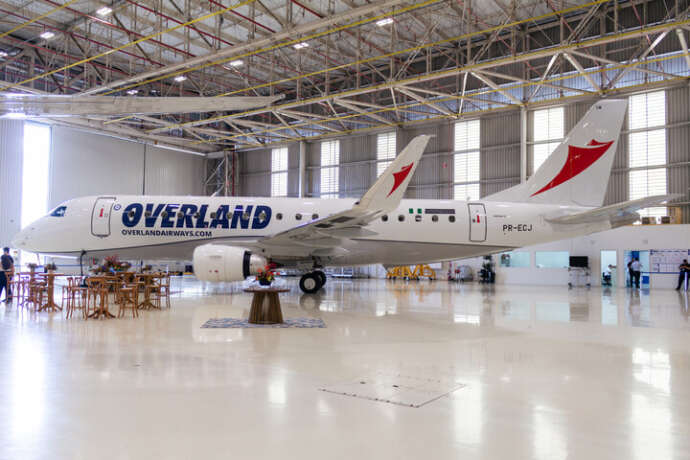
Besides these challenges, AON also lamented that the aircraft that are due for maintenance have been grounded and cannot be ferried overseas because of the scarcity of Forex.
The body noted as a result of this, there is continuous depletion of airplanes in their fleet without replenishment, warning that if this continues the country may not have operating aircraft for domestic services.
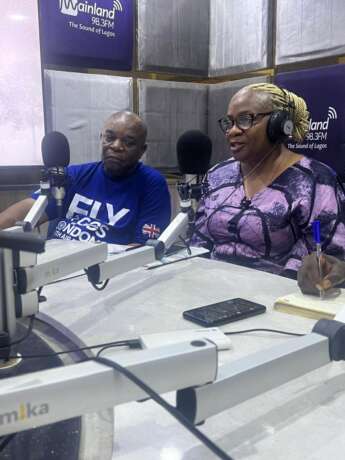
The spokesman of AON, Prof. Obiora Okonkwo who disclosed this said that airlines need urgent Federal Government intervention without which many carriers would go under and that in the event of that government would be their undertaker.
He pointed out that lack of stability in foreign exchange and the soaring price of aviation fuel, which is now N1,300 per litre, have eroded their ability to plan and have created uncertainty and precariousness in the operation of airlines.
Okonkwo, who is also the Chairman of United Nigeria Airlines (UNA) explained that travellers, who bought tickets in 2023 when aviation fuel was N700 per litre and exchange rate was N800/$1 would be airlifted at the current price of aviation, N1,300 per litre and exchange rate of N1400/$1 and that as result, airlines are recording huge losses on those tickets.
“We are making losses on factors that are beyond our control. We are not only faced with the problem of scarcity of dollars; even the aviation ecosystem is feeling the heat. Handling companies have increased the cost of their services, airports have increased their charges and those that service the aircraft have also increased the cost of their services. The monies for these payments are coming from the passengers who are already exhausted financially,” he said.
The UNA Chairman said that many businesses in Nigeria are making poor returns and that those entrepreneurs who are the crux of passengers that travel during the high and low season are no more travelling and those who travel on tourism and social engagement are not enough to provide airlines good load factor to sustain their operations at the current low season.
“Passenger traffic has shrunk because even those on social engagement like weddings, burials and other ceremonies may not be inclined to spend money on flight tickets; they would rather send credit alerts to those hosting the events who would appreciate such gestures. So, they pay instead of appearing in person,” he said.
Okonkwo said that airlines want to engage the Federal government to see how it can intervene to save airlines from folding up, noting that presently the government may not understand how serious the situation is to airlines.
“Air travel is a catalyst to economic development. There should have been government engagement with airlines at different levels. Airlines do not have special forex allocation; so, they buy at the same place traders who trade Brazilian hair, textiles and others buy. Our passion to remain in this business is being eroded. We are at the point of oxygen supply. Some airlines are going into a coma. Our equipment is diminishing. The minimal revenues we earn to keep the airlines flying, we convert to pay our lessors.
“It is impossible to bring in more aircraft. Aircraft owners have become skeptical because of country risk. A Nigerian airline may meet their terms, all the standard criteria but the aircraft owners consider country risk above other factors. Country risk supersedes everything and lessors have their own obligations. There is nothing personal. Some airlines deposited money with the Central Bank of Nigeria (CBN) but they cannot provide us the needed dollars,” Okonkwo said.
He also noted that there are fixed costs which airlines must pay whether they fly empty or with passengers, lamenting that even if an airline borrows money to support the current downturn, the interest rate is still at 26 per cent, reiterating that airlines need special allocation of dollars for them to survive because airlines need dollars to buy aircraft, maintain their fleet and order spares.
About The Author