As stakeholders in the AirCargo sub sector of the aviation industry begins the creation of pathway to successful AirCargo business, the President of National President of Africa Association of Professional Freight Forwarders and Logistics of Nigeria (APFFLON), Otunba Frank Ogunojemite, has stated that extortion and bureaucracy by Federal Government agencies are part of the challenges facing air freighting of goods in the country.
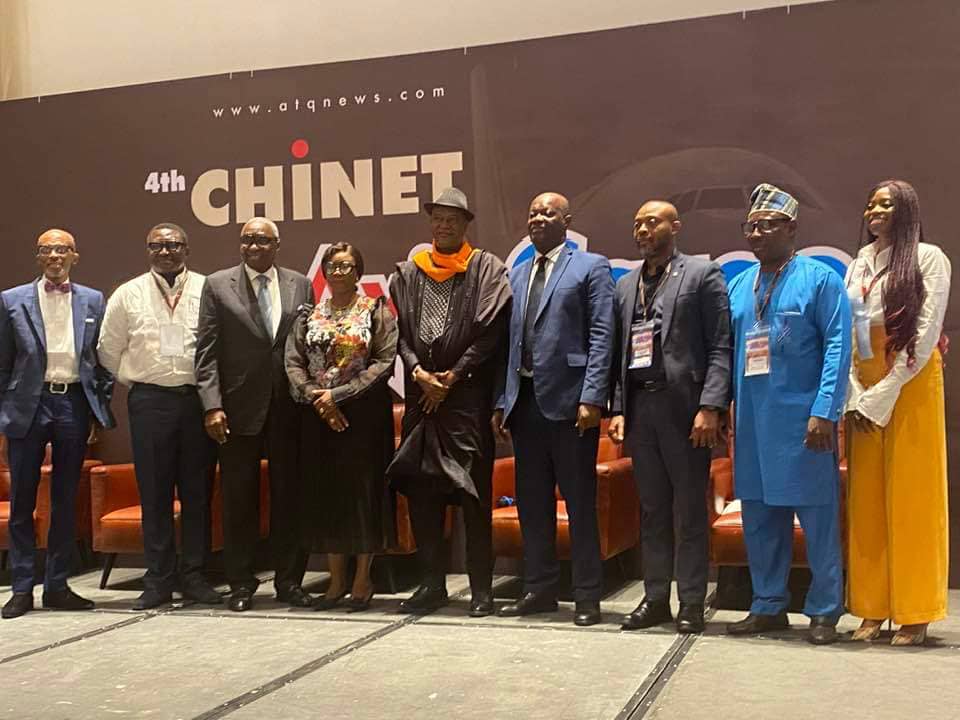
Ogunojemite stated this while presenting a paper titled, “Challenges of Export at Nigerian Airports,” at the 4th Chinet AviaCargo Conference & Awards 2024 with the theme, “E-Commerce and the Future of AirCargo in Africa: The Building Blocks” yesterday in Lagos.
He pointed out that officials of the Federal Government agencies such as: Quarantine, National Agency for Food Drug Administration and Control (NAFDAC), Nigerian Immigration Service (NIS) Customs and others constitute obstacles to easy movement of goods to the underbelly of the aircraft that airlift them to various destinations.
Ogunojemite stated that using government bureaucracy and laws, these officials rigidly insist on certain conditions that must be met before they would allow these goods to be exported; but when bribed, they relax all the rules.
He added that the Nigeria Export Processing Zone Authority (NEPZA) said that some of these laws that these government officials used in creating obstacles for AirCargo do not exist in the books but are created by these agency officials to extort money from exporters.
According to him, “If you look at what is going on in some of our aviation industries precisely in this environment, there are a lot of unapproved people in that place. Maybe because it is our usual Nigerian way of doing things, some of these levies cannot be accountable for. How many agencies are even in Lagos (Murtala Muhammed International Airport). If you go to the airport, somebody will tell you that they have to survive but this is not the same thing we see when we travel to other countries. You hardly see all these kinds of things; it is a crime to even think of gratification.”
The APFFLON national president stated that his years of experience and deep understanding of the freight forwarding logistics sector has provided valuable insights into the obstacles faced by exporters at Nigerian airports and potential solutions to these challenges.
He listed the challenges to Hinclude the cost of aircraft and maintenance, high cost of freight, poor incentives and government’s quality of regulations, deficiency of cargo security, technology, harassment and extortion by law enforcement agencies, climate change and multiple taxation.
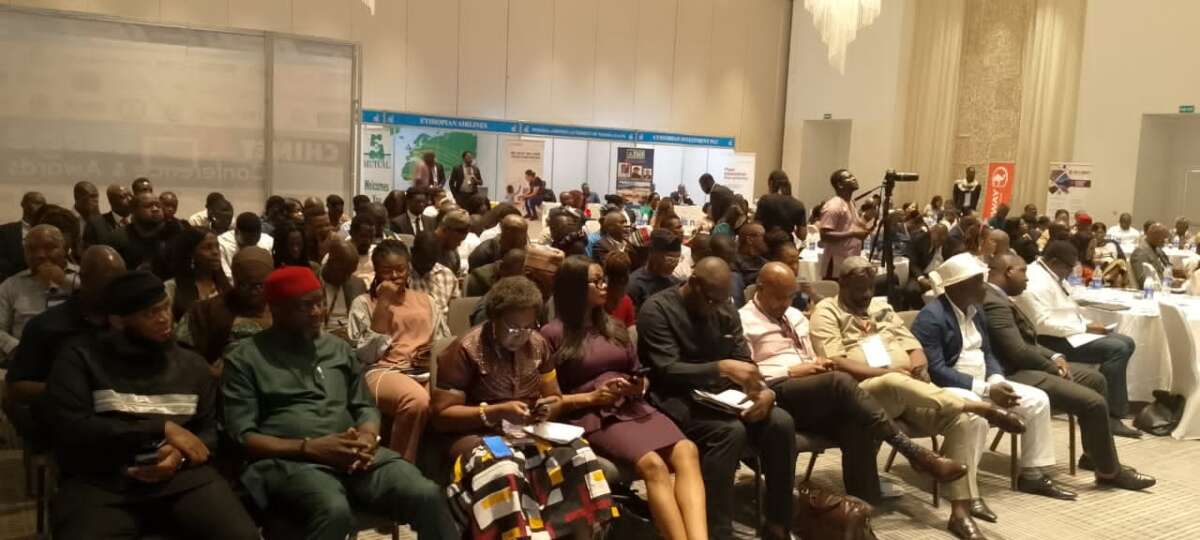
Photo caption : A cross section of participants at the just concluded CHINET 2024 AviaCargo Conference and Awards in Lagos yesterday.
He, however, posited that some of the major factors identified as impediments to successful export via Nigerian airports are bureaucracies and protocols, calling on the government and its agencies to review and enforce smoother processes to export of potentially multi-million dollars Nigerian goods.
He said that from not meeting standardisation, inefficient regulation, corruption to hiccups in cargo freighting from the nation’s airports, it is obvious that many facts have proven that it is Nigeria that is holding itself down from taking advantage of the huge market, while the country’s farm produce and other products are in high demand from different parts of the world.
Fact, he said has emerged that for Nigeria to benefit maximally from the African Continental Free Trade Area (AfCFTA) agreement, projected to elevate 30 million people out of abject poverty, generate a market hub that will connect 1.3 billion people in 55 countries and also generate $3.4 trillion aggregate GDP, the country has to be adequately prepared to effectively compete in export trade.
Experts, he argued, had disclosed that for this to be achieved, there must be effective distribution channels in which logistics, which is movement of people and goods, play an indispensable role of bridging the gap between the dream and its reality.
Ogunojemite opined that reference was made after a report carried out after a conference recently, which he said highlighted the inadequacies within the export space, which include problems of limited export production, limited/ or no capacity for certification/packaging of exportable products, infrastructural deficiency in the logistics and evacuation of exports, low penetration and access to key markets.
He identified limited export production as one of the challenges of AirCargo business, as according to him Nigerians are more interested in importation of goods rather than promoting export.
In his words, “Most of these challenges will continue to exist until every agency of government will consciously aim at helping to mitigate and resolve some of these issues, and not seeing themselves as being up there, while every other person is down beneath.
He also identified certification as one of the major challenges exporters face, adding that it is very difficult to obtain certification from the National Agency for Food and Drug Administration and Control (NAFDAC), a Nigerian agency.
The APFFLON boss called on Standards Organisation of Nigeria (SON) to do more on certification, complaining that businesses are tasked daily to get the Mandatory Conformity Assessment Programme (MANCAP), despite the fact that there are no standards to process the applications.
He contended that for all these to be achieved, there must be effective distribution channels in which logistics, which is movement of people and goods, play an indispensable role of bridging the gap between the dream and its reality.
About The Author