…Says It Is A Landmark Achievement For Nigeria’s Cultural Legacy, Global Recognition
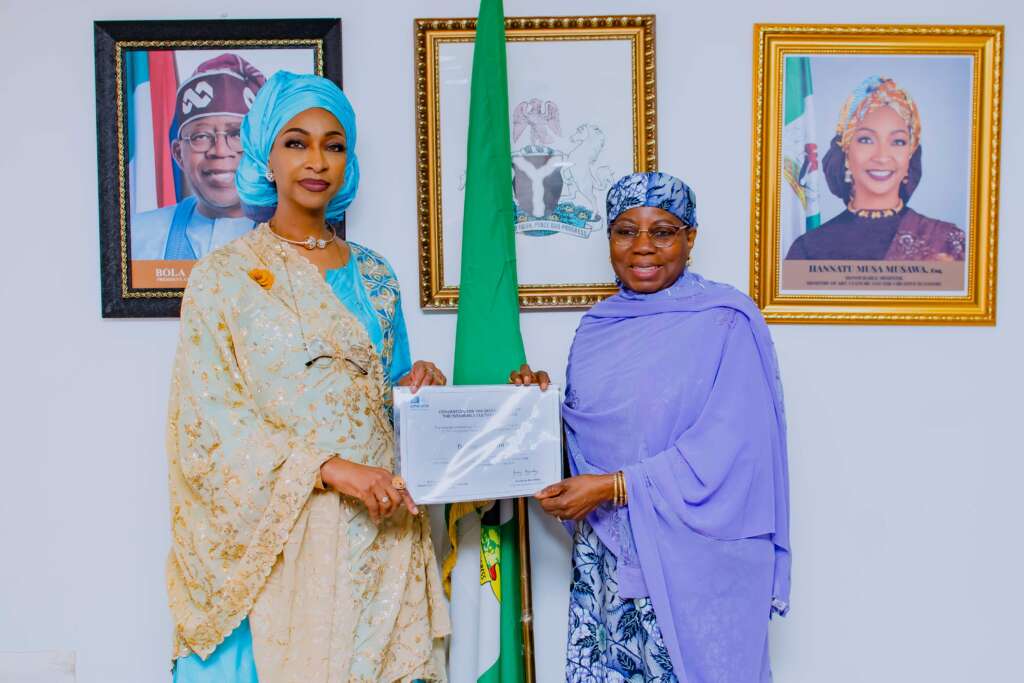
The Minister of Arts, Culture, Tourism, and Creative Economy, Barr. Hannatu Musawa, has been honoured with the highly prestigious UNESCO certificate in recognition of the successful inscription of the Kano Durbar on the Representative List of the Intangible Cultural Heritage of Humanity.
This achievement marks a significant milestone for Nigeria, celebrating its rich cultural heritage and securing a vital place for the Kano Durbar festival on the global cultural stage.
The certificate was officially presented by Her Excellency, Permanent Representative of Nigeria to UNESCO, in a formal ceremony held in Abuja. This ceremony was attended by key figures, including Hajia Zainab Ali-Biu, Director of International Cultural Relations at the Ministry of Arts, Culture, Tourism, and Creative Economy, the Permanent Secretary of the Ministry, and a host of other dignitaries, who were all part of the extensive process leading to the successful inscription.
Hannatu expressed deep appreciation for the UNESCO recognition, which she emphasised not only celebrates the heritage of Kano but also serves as a tribute to the entire nation’s rich cultural diversity.
“On behalf of His Excellency, President Bola Ahmed Tinubu, and the people of Nigeria, we are immensely proud of this achievement. The inscription of the Kano Durbar on the UNESCO Representative List is a testament to the strength and vibrancy of Nigeria’s cultural traditions, and it reinforces our commitment to cultural preservation,” she remarked passionately.
Acknowledging UNESCO’s role and the rigorous nomination process, the Permanent Representative of Nigeria to UNESCO, Dr. Hajo Sani in her remarks gave a detailed account of the rigorous and comprehensive process that led to the Kano Durbar’s successful inscription. Dr. Sani outlined the five key criteria that UNESCO applies for inclusion on the Intangible Cultural Heritage List, which are:
- Cultural significance: The Kano Durbar as a festival has immense cultural and historical significance to the people of Kano, Nigeria, and the wider region, symbolizing a rich tradition of leadership, unity, and celebration.
- Tradition and continuity: The festival has been practiced for centuries, passed down through generations, and continues to be a central element of the cultural fabric of the region.
- Community involvement: The festival involves local communities, artisans, and performers, ensuring its preservation and deep connection to the local people.
- Authenticity: The festival retains its traditional elements, including its unique processions, costumes, and equestrian displays, which have been preserved in their original form.
- Impact on cultural identity: The Kano Durbar plays a key role in affirming the identity of the people of Kano and Nigeria, offering a platform for cultural exchange and fostering pride in their heritage.
Sani also highlighted the involvement of the 24 member states of the UNESCO Committee that reviewed the nomination, emphasising their collaboration in acknowledging the global importance of the Kano Durbar as an iconic festival.
The successful inscription was made possible through the tireless efforts of these member states, Nigerian cultural experts, and the strong leadership of the Ministry of Arts, Culture, Tourism, and Creative Economy.
On the role of the Nigerian Government and the people in achieving feat, the Minister acknowledged the significant contributions of all parties involved, particularly the Nigerian government, the Ministry, and the people of Kano State.
She specifically highlighted the role of the Kano State Government and local stakeholders in ensuring the festival’s continued success and preservation.
“This achievement is not just a victory for the Ministry or the Government of Nigeria, but for the people of Kano, who have kept this festival alive for centuries, and for all Nigerians who take pride in their cultural heritage,” the Minister emphasised.
The Minister also expressed gratitude to UNESCO for their continued support in advancing global cultural diplomacy.
“We are deeply grateful to UNESCO for recognizing the cultural richness of the Kano Durbar. This is a significant moment for cultural diplomacy and a milestone in our journey to promote Nigerian heritage on the world stage,” she added.
Speaking on the economic and cultural impact of the inscription, the Minister noted that the UNESCO inscription of the Kano Durbar carries with it not just cultural prestige, but significant economic potential, adding that the recognition provides an opportunity to boost Nigeria’s tourism sector, attract global attention to Nigeria’s unique cultural offerings, and create economic opportunities for the local communities involved in the festival.
The Kano Durbar festival is a major attraction that draws thousands of visitors, both from within Nigeria and abroad, to witness the grandeur and cultural pride of the northern Nigerian tradition.
This global recognition positions the festival as a key driver of sustainable tourism, contributing to Nigeria’s economic growth through increased tourism revenues, cultural exchange, and enhanced international visibility.
On whether it will strengthening Nigeria’s cultural diplomacy and international partnerships, she stated the Nigerian government’s commitment to further enhancing its cultural diplomacy efforts.
She called for strengthened international partnerships in the promotion of Nigerian cultural heritage.
“This recognition is an endorsement of Nigeria’s role in the global cultural landscape. As we continue to preserve and promote our traditions, we also open doors for greater cultural exchange and collaboration with the global community,” she said.
She use the opportunity to acknowledge the ongoing work of the Ministry, under the leadership of President Bola Tinubu’s administration, in aligning cultural preservation with the national priorities of economic empowerment, youth engagement, and the promotion of sustainable tourism in line with the Ministry’s 8-Point Agenda.
This agenda focuses on enhancing Nigeria’s cultural diplomacy, promoting sustainable tourism, empowering youth through creative industries, preserving cultural heritage, fostering international collaborations, promoting inclusive economic growth, advancing global visibility for Nigerian arts and culture, and integrating tourism with broader national development goals.
“The recognition of the Kano Durbar not only celebrates our cultural heritage but also creates opportunities to advance these priorities and drive economic growth through tourism, creativity, and cultural exchange,” she added.
As Nigeria celebrates this historic achievement, the Minister called on all stakeholders, including state governments, local communities, and the private sector, to work together to preserve and showcase Nigeria’s cultural treasures.
“This inscription of the Kano Durbar offers us the chance to not only preserve our heritage but also to use it as a catalyst for economic empowerment and cultural exchange,” the Minister said.
About The Author