…Says Future Is Bright
The National Council for Arts and Culture (NCAC), has stated that it would use the occasion of its 50th anniversary to celebrate Nigeria’s entire cultural, creative, tourism sector, its history, present, and future endeavours.
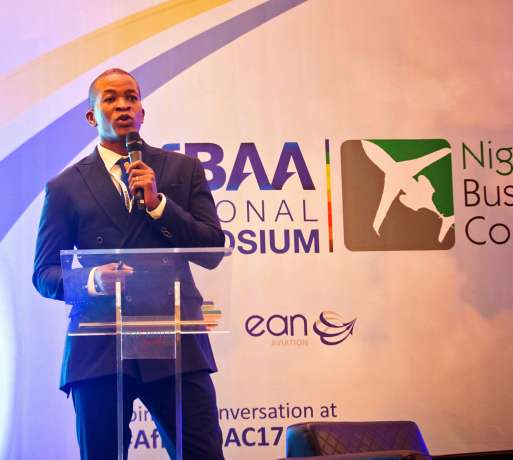
According to a statement signed by the Director-General/CEO,NCAC, Obi Asika, this milestone is not just about NCAC but about the millions of artists, creators, storytellers, musicians, designers, filmmakers, performers, cultural custodians, and innovators, who have shaped Nigeria’s cultural landscape over the past five decades.
“We honour and recognise the contributions of our traditional arts and crafts sector, the many indigenous festivals that preserve our heritage, and the countless cultural institutions across the country that keep our identity alive. From state councils for arts and culture to our chief executives of culture group—the dedicated public sector leaders working tirelessly to advance our cultural and tourism industries—we acknowledge and appreciate their efforts in driving Nigeria’s creative economy,” Asika said.
NCAC, he said extend its deepest gratitude to His Excellency, President Bola Tinubu,, for his visionary leadership in creating the new Ministry of Arts, Culture, and the Creative Economy, and for appointing him to lead NCAC at this pivotal moment.
He said that the President’s commitment to Nigeria’s cultural and creative industries is a testament to the power of the country’s heritage and the potential of its creative economy.
“We also sincerely thank our esteemed supervising Minister, Hon. Hannatu Musawa, for her unwavering support, leadership, and commitment to the growth of our sector. Her dedication has been instrumental in driving the policies and programs that are shaping the future of Nigeria’s creative industries,” he said.
On honouring traditional rulers, the custodians of culture and heritage, Asika pointed out that no celebration of nigeria’s cultural journey would be complete without acknowledging the critical role of traditional rulers in preserving, protecting, and promoting Nigeria’s cultural heritage.
He acknowledged that across the diverse ethnic groups, monarchs and traditional institutions remain the bedrock of cultural identity, ensuring that the traditions are passed down through generations.
The NCAC boss added that from the Obas of Yoruba land, the Emirs of the North, the Igwes of the East, the Tor Tiv, the Obong of Calabar, the Shehus, the Oba of Benin, and the Obi of Onitsha, Nigeria’s traditional rulers continue to serve as custodians of language, customs, festivals, and indigenous governance systems.
Masquerade culture, royal festivals, ancestral rites, drumming traditions, and sacred dances, he noted remain central to national identity, reflecting the country’s diversity while uniting Nigerians as one people.
Asika maintained that festivals such as the Ojude Oba Festival in Ijebu-Ode to the Argungu Fishing Festival, the Osun Osogbo Festival, Ofala Onitsha, the Igue Festival of Benin, New Yam Festivals across Igbo land, the Durbar, and Calabar Carnival serves as cultural milestones that celebrate Nigeria’s history and communal heritage.
According to him, “The resilience of our traditional institutions has ensured that, despite modernization, our cultural practices remain vibrant, providing spiritual, social, and economic value to communities across Nigeria. We salute our royal fathers for their steadfast commitment to heritage preservation, community cohesion, and cultural continuity.”
Speaking on the unstoppable rise of Nigerian soft power, the NCAC Director General, said that reached well over 2 billion followers across social media platforms and achieved billions of views and streams on multiple digital platforms.
He said that the country’s cultural influence continues to grow as Afrobeats, Nollywood, fashion, and Nigerian cuisine globalise, bringing with them the special energy that all Nigerians carry.
Afrobeats, he said has evolved into a global movement, influencing music charts from Lagos to London, New York, and Tokyo, adding that Nigeria fashion designers are dressing global icons, while Nigerian food is now a culinary experience in major cities worldwide.
He posted that this incredible expansion of Nigerian culture is a testament to Nigeria’s creativity, resilience, and the boundless energy of the people.
On Nigeria’s global diaspora as a driving force in culture & influence, Asika said its pread across North America, Europe, the Caribbean, South America, and Asia plays an immense role in shaping our soft power.
He also pointed out that from arts and entertainment to fashion, sports, technology, and academia, Nigerians abroad have cemented their presence as key influencers in global culture.
On film & television, he acknowledged that
Ṣàde Adu, a global music icon whose influence spans decades,Chiwetel Ejiofor, David Oyelowo, John Boyega, Cynthia Erivo, Hakeem Kae-Kazim, Damson Idris, Uzo Aduba, Adewale Akinnuoye-Agbaje, and others have proudly carried Nigerian heritage into mainstream global cinema.
He mentioned that Julius Onah, the Nigerian-American filmmaker, who has already directed Captain America: Brave New World, historians and storytellers like David Olusoga and Ed Keazor continue to reshape global narratives about Africa’s past and present.
He remarked that Nigerian sportsmen and women have made their mark worldwide in sports such as football, basketball, boxing, and mixed martial arts, adding that football Legends such as Nwankwo Kanu, Jay-Jay Okocha, Daniel Amokachi, Mikel Obi, and Victor Osimhen have cemented Nigeria’s football dominance.
NBA & NFL Stars like Hakeem Olajuwon, Giannis Antetokounmpo (of Nigerian heritage), Victor Oladipo, and Emeka Okafor in the NBA, along with Osi Umenyiora and Chidobe Awuzie in the NFL, represent Nigeria’s sporting excellence on a global scale.
While World Champion Fighters: Anthony Joshua (boxing), Israel Adesanya “Stylebender” (UFC), and Kamaru Usman (UFC) have dominated combat sports on the global stage, proving that Nigerian warriors still rule the fight game.
On media, fashion & photography, Asika said Ekow Eshun, the former editor of The Face and a creative force at GQ, BBC, and beyond, has paved the way for African narratives in global publishing.
Other Nigerians who have done the country proud according to are :
• Angela Nwandu, the visionary behind The Shade Room, a platform with over 30 million followers, revolutionized digital media and storytelling.
• Misan Harriman, the renowned Nigerian-British photographer, whose work has graced the covers of Vogue and other global publications.
• British-Nigerian fashion designers and global stylists like Mowalola Ogunlesi and Duro Olowu continue to shape international fashion.
In his words, “Nigeria’s global diaspora has been instrumental in spreading Nigerian soft power, influencing music, sports, fashion, media, and business worldwide. Their success is a testament to the unstoppable rise of Nigerians
“As we celebrate 50 years of NCAC, we honor the legends of the past, uplift the kings and queens of today, and champion the rising stars of tomorrow.
” Nigeria is blessed with enormous talent across all creative and tourism sectors. We recognise and salute the impact of Nigeria’s biggest influencers and digital storytellers—Emmanuella and Mark Angel, Mr. Macaroni, Brain Jotter, and many more—who are redefining entertainment in the digital age.
“To every artist, performer, filmmaker, designer, content creator, entrepreneur, traditional ruler, and cultural ambassador—you are the heartbeat of Nigeria’s creative future. This milestone belongs to all of us, and the future is limitless,”Asika concluded.
About The Author