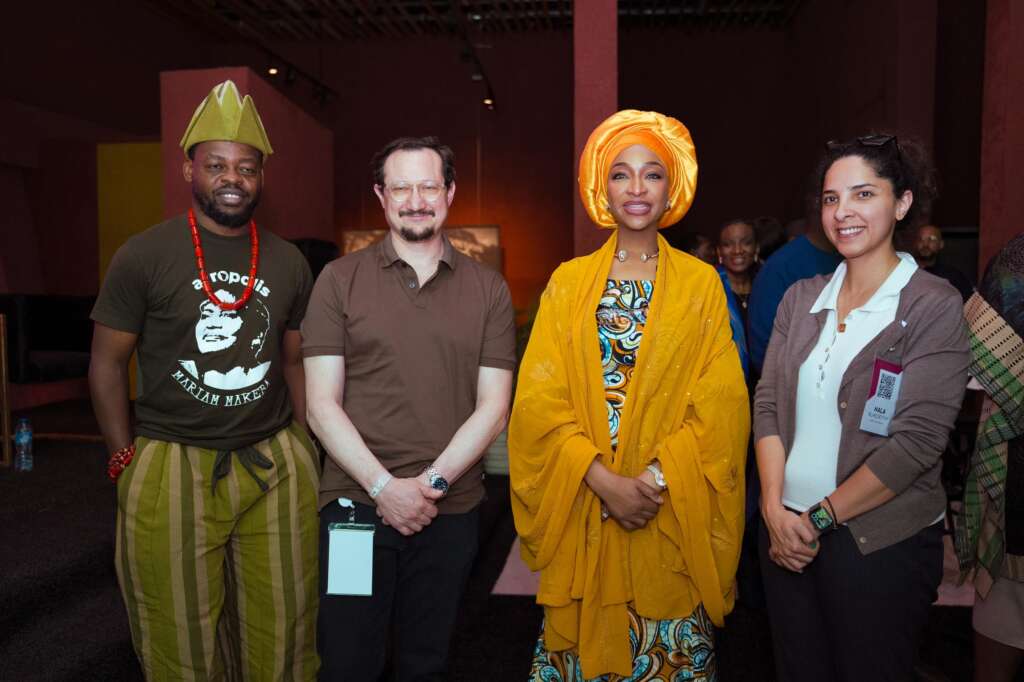
Nigeria has taken the lead at the groundbreaking and historic Music Economy Development Initiative (MEDI) Policy Assembly convened in.Lagos.
The event brings together key global and regional stakeholders to chart a transformative course for Africa’s music economy.
This inaugural event, held ahead of the Move Afrika concert featuring John Legend, underscored the power of music as a catalyst for economic growth, job creation, and cultural advancement across the continent.
The event is organised by the Centre for Music Ecosystems and Global Citizen, with support from the International Finance Corporation (IFC), Universal Music Group, the Federal Ministry of Art, Culture, Tourism, and the Creative Economy, Lagos State Government, and the National Council for Arts and Culture (NCAC), the assembly focused on actionable policy frameworks to strengthen Africa’s music infrastructure.
Delivering a goodwill message at the event, the Minister of Art, Culture, Tourism, and the Creative Economy of Nigeria, Hannatu Musawa highlighted the critical role of music in driving sustainable economic growth.
“Music is more than just an art form; it is an engine of economic transformation. Across Nigeria and Africa, it has the power to create jobs, inspire innovation, and enhance global cultural exchange. However, we must address the structural challenges impeding its full potential,” she stated.
The Minister further emphasided that the Nigerian government, under President Bola Tinubu’s Renewed Hope Agenda, is prioritising key reforms to support the creative industry, aligning with Presidential Priority Number Seven: Accelerating Diversification Through Industrialization, Digitisation, Creative Arts, Manufacturing, and Innovation.
She noted the several groundbreaking initiatives already in motion:
A comprehensive framework for strengthening copyright protections to ensure African artists and rightsholders retain the economic benefits of their work.
An innovative financing mechanism designed to provide long-term investment in Nigeria’s creative sector.
Creative and Tourism Industries Infrastructure Corporation (CTICo). This is a newly established entity focused on building live music infrastructure to support large-scale concerts, festivals, and touring networks across Africa.
Strategic Panels and Industry Insights
Throughout the day, thought leaders and experts engaged in high-level discussions aimed at addressing critical challenges and unlocking opportunities within the African music industry. Key sessions included:
Copyright and Intellectual Property Reform:
A deep dive into strengthening Africa’s copyright infrastructure to protect artists’ rights and keep music-generated revenues within the continent.
Touring Infrastructure as Economic Development: Exploring solutions to establish Africa as a major touring destination, ensuring artists and event organisers have the necessary infrastructure to thrive.
Financing Africa’s Music Industry: Industry experts, including financial leaders, investors, and creative sector executives, discussed innovative funding models to drive sustainable growth in music production and distribution.
Among the notable speakers were Baba Agba, Special Assistant to the President on Creativity; Robbert Baruch, SVP Public Affairs Europe at Universal Music Group; and Xavier Reille, Creative and Cultural Sector Lead for Africa at the IFC.
A United Front for Africa’s Music Future
At end of the event, the Minister reaffirmed the government’s commitment to fostering a thriving music economy through strategic policies and partnerships.
“This assembly is not just a conversation, it is a call to action. By working together, we can position Africa as a global powerhouse in music, ensuring that our artists, creatives, and industry professionals reap the rewards of their talent and hard work,” she declared.
With MEDI at the forefront, this landmark gathering marks a new era in Africa’s creative economy, reinforcing Nigeria’s role as a leader in music policy, investment, and innovation.
About The Author