
The Managing Director of Aero Contractors, Capt. Ado Sanusi, has summited that for Nigeria to become an aviation hub,the country must have strong domestic carriers, world class maintenance and training facilities, and deliberate supportive policies by the Federal Government .
This is just as he also posited that the provision of the state -of the-art infrastructure alone is not enough to make Nigeria an aviation hub.
Sanusi made these submission at the Quarter One of Aviation Safety Round Table Initiative (ASRTI) Breakfast Business Meeting in Lagos,
According to him, “For a successful hub, it’s not just about building a very good airport; you also need a home-based airline.”
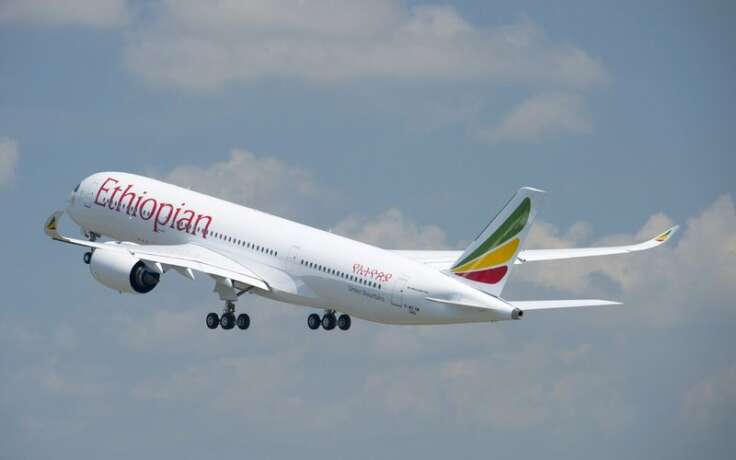
To buttress his point, he cited global examples such as Emirates in Dubai, Ethiopian Airlines in Addis Ababa, and Lufthansa at Frankfurt, adding that these airlines are the backbones of international transit hubs, which brings about airlifting passengers efficiently and boosting airport competitiveness.
The Managing Director contended that airlines does not only play very important role in building an aviation hub but that they are also primary drivers of a hub.
“Strong airlines can be carriers of flights and should be helped by the government to grow.” he said.
He urged the Federal Government to formulate policy and provide regulatory support to create conducive environment for domestic airlines to operate and break even.
Sanusi with over three decades of experience, noted that a sustainable Nigeria Aviation Hub stands on three tripods, which according to him includes: strong domestic carriers that m ust have capacity, reliable, and financially stable to attract domestic and international traffic.
Secondly, there must be efficient airport infrastructure, modern terminals, optimised baggage handling, and streamlined transit processes that can compete with global hubs.
Thirdly, the Federal Government must formulate supportive policies and training ecosystem, regulatory clarity, fee rationalisation, foreign exchange access, and state-of-the-art training facilities that will ensure airlines operate safely and efficiently.
On transit passenger handling, Sanusi said it remains one of Nigeria’s most pressing challenges.
According to him, “Transit passenger handling and baggage transfer are extremely important,”
International hubs, he stated increasingly rely on transit traffic, that boost revenue and strengthens the hub’s connectivity, warning that without this Nigerian airports risk losing competitive advantage.
Speaking further, the Aero boss opined that regulatory reform is equally critical, adding that complex fees and bureaucratic bottlenecks prevent investors from investing in aviation business, a situation, he said can lead to stunted growth.
In his words, “When you create multiple fees for aviation, they don’t grow; multiple fees actually stimulate growth.”
He maintained that streamlined processes, predictable charges, and investor-friendly policies can encourage airline expansion and international partnerships.
On foreign exchange availability, Sanusi said that it also a major challenge for local carriers, explaining that reliable Foreign Exchange access ensures operational stability, facilitates aircraft acquisition and maintenance, and enables Nigerian airlines to compete in international markets.
About The Author