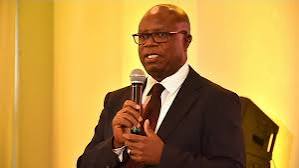

A representative of the African Export-Import Bank (Afriexim Bank), Ayo Mubarak has revealed that the 2022 study carried out by the bank identified long term financing and limited fleet as key challenges facing African airlines
Other challenges facing African airlines according to the report include : competitive priced aircraft financing. and fleet renewal.
He hinted that the purpose of the study was to understand the structural gaps in African aviation space, particularly focussing on African airlines specifically.
He also said that the data shows that the weighted average of leased fleets by global airlines is about 81 per cent compared to about 38 per cent for African airlines, which according to him is significantly low.
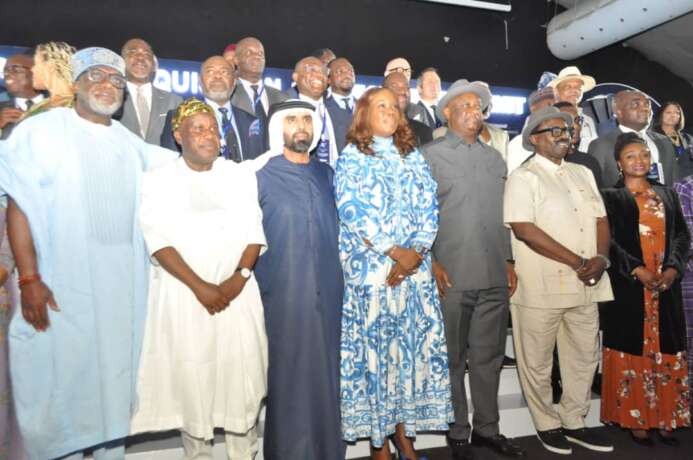
Mubarak spoke at the just ended two- day Nigerian Aircraft Acquisition Investment Summit ( NAAIS) in Lagos..
Mubarak, who is from the Finance Desk of Afriexim Bank and one of the speakers at the event, posited that the role of aviation support trade and industrial groups remains significantly untapped.
He said that regional and local airlines that cannot support the seamless movement of goods and people that would drive trade continue to operate under the significant constraints and particularly high cost of trade.
African airlines, Mubarak said faces systematic barriers to accessing aircraft financing, elevated perception of foreign and sovereign airline credit risk, driving high capital charges, limited availability of long-term USD funding, restricted access to export credit agencies, and underdeveloped local capital markets.
These constraints, he explained translate into material inferiority terms for the African airline industry, adding that there is a reliance on short-term, high-cost operating basis, high maintenance reserve requirements, and security forces.
“So, in effect, we see a scenario where there’s no leasing penetration, about 3% and 4.1% of the share of leased fleets, and the value are non-valued from aircraft’s perspective. Sub-optimal leasing policies, transactions to encourage people to hold on to what value they have,” he said.
Growth and fleets modernisation is constrained, and a consistently widening gap versus other emerging markets like Asia and the West. If an African leasing platform, which are for example the second, can break the cycle of fragmented, high-cost educational investment, by aggregating demand across multiple countries and airlines, ( the platform will reduce capital costs, drive industrial investment, enhance connectivity, and make African aviation a scalable, investable asset class,” he added.
On what the key benefits of an aviation platform are l, Mubarak said that it lower cost of capital through aggregation, beings about industrial development, that’s predictable, long-term fleet planning, support for MROs, training academies, cargos, and creating of logistics hubs.
Other benefits are :that it enhance trade facilitation, expanding freighter leasing and ground support equipment, enhanced air safety, trade flows. industrialisation investment, standardisation, diversification, and governments, make aviation suitable for pension and sovereign funds.
*Speaking on what lesson from trade finance pooling applies to aviation, Mubarak said that effective experience at the multi-obligo trade finance facility demonstrates the power of being reduced to risk and crowd in capital.
He said that for those who may not be familiar with the term trade finance pooling, the Afriexim Bank Representative, said that it is a structured finance approach where multiple trade finance exposures, such as loan guarantees and trade receivables are combined into one single diversified pool instead of being handled by many small, different transactions.
This simple principle, he said can be applied to aviation, which helps in diversification, standardisation and credit enhancements.
Mubarak said that the current Global Aircraft Leasing Platform that are flexible and together with identified partners and some of Afriexim Bank partners are in the room,working on this to launch and will be a classic example of how trade finance pooling solutions can apply to aviation.
He stressed that in this structured approach, the leasing platform can be thought of as the pool that will host the underlying aircraft, which will be the cash generating assets, and will be set up as an escape.
FEDA, he explained is an equity provider and that it is fund for export government and the equity arm of AFREXIM.
AFREXIM, he pointed out has the underwriting guarantee for debt funders, which will allow institutional investors to provide senior debt to fund assets that the SPV would acquire.
“So basically what we are doing is providing both equity into the leasing platform and putting the necessary guarantees and instruments to kind of encourage the investors to come into this space and support this financing plan.
“The funding will be used to fund different underlying assets, which will then be used to multiply debt across geographies, which is in Africa.
” Investors can participate in both debt and equity with well-defined risk parameters,” he said.
Additionally, Mubarak said that the platform will be part of a well-established value source that will provide operational oversight of the debt-to-debt activities of the SPV.
On the governance standards required to attract institutional capital into Africa, the Afriexim Bank Representative said they include: harmonisation, which is the Saturn, and the Yamasako decision.
Other according to him are: strong governance, independent investment communities, fair cash flow, waterfalls, and possible governance, and possible repossession and ethics rights, ESGP and disclosure standards, which are also important.
Speaking what the initial investments in Africa are and why investment in Africa remained fragmented, and how Afriexim Bank can make changes, said that Africa’s initial sector has enormous potential, but that historically, it has not attracted large, coordinated investment.
He stressed that in this state, the financing has come through one-off, so the fragmented segment from small and financially weak airlines, institutional non-PASA, political interference, and institutional infrastructure subsidies.
He noted that what is required from regulators, banks, and operators to scale the aircraft leasing in Africa is regulation.
According to him, under regulation, you have the legal and treaty requirements, with things like the IDRA rights, the ethics and reputation framework, targeted credit supports, and tax and leasing reforms.
“Another thing is strong independent aviation regulators,which we need to have in Africa to ensure things move forward. The second is banks and financial institutions. They shift from passive lenders to structured financial financing,” he said.
About The Author