By Prosper Okoye
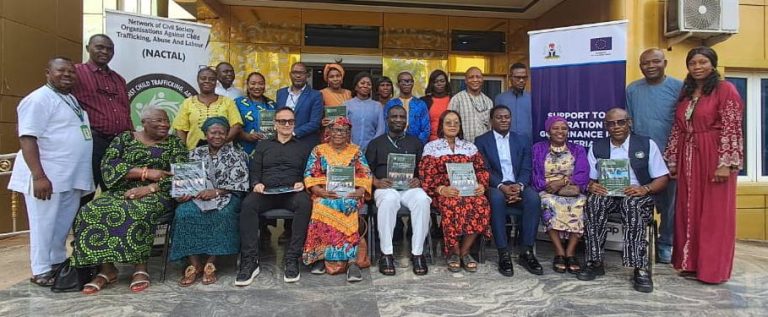
The Network Against Child Trafficking, Abuse and Labour (NACTAL) has commenced a three-day training for its members across Nigeria on the use of national monitoring, evaluation and reporting tools on human trafficking, warning that weak and inconsistent data collection continues to undermine efforts to combat the crime.
The training, held in Keffi, Nasarawa State, is supported under the Support to Migration Governance in Nigeria project (Component III), funded by the European Union and implemented by FIAP.
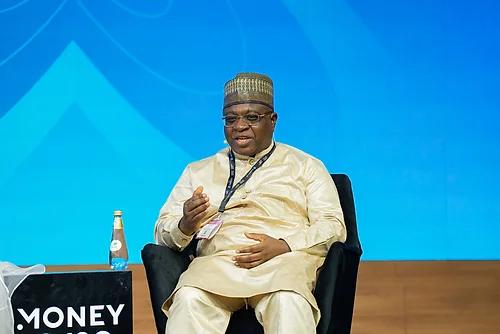
NACTAL National President, Abdul Abubakar, said the workshop was designed to strengthen the capacity of civil society organisations to properly document and track cases of trafficking and related abuses across the country.
He said gaps in reporting had continued to affect both national and international understanding of the scale of human trafficking in Nigeria, despite the presence of civil society organisations working across all 36 states and the Federal Capital Territory, as well as regional partners in West Africa.
Abubakar described trafficking as a complex transnational organised crime driven by networks operating across borders and within communities, adding that while awareness had improved, many communities still lacked sufficient knowledge of traffickers’ methods.
He called for stronger engagement with traditional, religious and community leaders to improve early detection of trafficking risks, particularly among children and young people.
The NACTAL National President said that the organisation had recently reviewed Nigeria’s contribution to the United States Department of State Trafficking in Persons Report, arguing that several interventions by stakeholders were not adequately captured.
Abubakar noted that the outcome of the training is expected to improve the quality and timeliness of data reporting among member organisations, strengthen coordination across states, and support evidence-based advocacy in Nigeria’s anti-trafficking response.
FIAP Deputy Team Lead, Javier Leon, said effective documentation was central to the fight against trafficking, warning that unrecorded interventions risk being excluded from national response systems.
“An achievement that is not recorded cannot be measured. An impact that is not measured cannot be demonstrated. And a reality that is not demonstrated can be easily forgotten,” he said.
Leon said trafficking should be viewed as a human survival issue rather than a technical exercise, noting that insecurity, poverty, displacement and irregular migration continue to create conditions that enable trafficking networks to thrive.
“Information is not a luxury. It is a necessity. Good data improves policies, and ultimately, good data helps save lives,” he added.
Also speaking, Veronica Umaru, representing the NACTAL Board Chairman, Chief Amina Abubakar, said the training was informative and would strengthen members’ understanding of reporting processes, including reporting to the National Agency for the Prohibition of Trafficking in Persons (NAPTIP).
She expressed hope that improved understanding of reporting tools would help ensure that civil society interventions are better reflected in international reports on trafficking.
On her part, the NACTAL National Treasurer, Kaneng Rwang-Pam, said the training exposed gaps in standardised reporting among member organisations and highlighted the need for uniform templates to improve data consistency.
She said inconsistencies in reporting had previously made it difficult to compile harmonised information for national databases, adding that the training provided clarity on existing tools and their proper use.
Rwang-Pam noted that while the reporting templates were useful, some members were not fully aware of them, particularly new entrants, and called for wider sensitisation and simplified implementation.
She also said civil society organisations should be given opportunities to contribute to future revisions of reporting tools and national action plans to ensure relevant activities are properly captured.
Participants at the training expressed optimism that improved understanding of monitoring and evaluation tools would strengthen Nigeria’s overall response to human trafficking and improve coordination among stakeholders.
About The Author