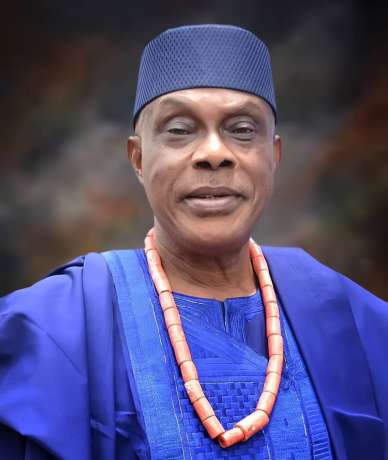

Photo caption : R-L Internal Auditor, Gideon Oludayo, South West Vice President, Dauud Gbenga, National President, Dr Aliyu Badaki, and South West Immediate Vice President, Mr Kayode Kolade, all of the Federation of Tourism Associations of Nigeria (FTAN); … during the media briefing held today by the Federation in Lagos.
…Says industry needs restructuring
…Limited tourism sector visibility, lack of stakeholders’ confidence major challenge
The Federation of Tourism Associations of Nigeria, FTAN, has called on the Federal Government to return the Acts establishing the National Institute of Hospitality and Tourism, NIHOTOUR, and the Nigeria Tourism Development Agency, NTDA, to the National Assembly for review.
FTAN said the move is to address overlapping functions in the two Acts, which it noted are generating conflict in the tourism industry.`
This is just as the Federation also advocated for the restructuring of the tourism sector.
The President of FTAN, Dr. Badaki Aliyu made these calls today at a media briefing in to mark the present administration’s one-year anniversary.
Badaki explained the Federation is advocating for the return of the Acts to the National Assembly
to rework and also ensure it reflects the true position of the industry with operators’ interest well protected, resolve conflicts and return the two agencies to the original mandates
He insisted that for the tourism industry to witness visibility and growth, it must be thoroughly restructured.
On current action, Badaki stated that FTAN actively participated in engagements surrounding the implementation of the NIHOTOUR and NTDA Acts, intensified advocacy for policy reforms, and maintained consistent representation of private sector interests in national tourism policy discussions.
He pointed out that the confusion and disagreement on the NIHOTOUR Act, 2022 was inherited from the past President of FTAN. The Act and its implementation has caused more harm than good which the industry has never witnessed before with lots of litigations going on especially with the involvement of the fifth columnists among the association’s members because of their private gains.
He insisted that the position of FTAN is that both the Acts of NTDA and NIHOTOUR should be returned to the National Assembly for re- enactment that will clearly define the roles of the agencies and stakeholders., adding that at the time being, the agencies should focus on their initial mandate while the process is going on.
FTAN, Badaki said is always open to constructive engagement and dialogue in resolving the issues with the Acts.
“We call on the Federal Government through the Federal Ministry of Arts, Culture, Tourism and Creative Economy to fast track this process as a matter of urgency and in line with the Federal Government Renewed Hope Agenda for the nation,” he said.
The past one year, the President, said has not been viewed merely as a period for recording achievements, but as an opportunity to honestly diagnose the long-standing structural challenges that have constrained the growth of Nigeria’s tourism industry and begin implementing practical, sustainable solutions through the Tourism Transformation Mandate (TTM).
He said that the current administration believes that meaningful transformation begins with acknowledging industry realities, mobilising stakeholders around shared priorities and taking deliberate actions that will outlive any single administration.
Speaking on institutional repositioning and governance challenge, Badaki pointed out that the absence of a unified strategic direction, fragmented stakeholder engagement and weak institutional coordination have limited the effectiveness of the organised private sector in influencing tourism development.
He said that the recommended solution is to strengthen FTAN as a professionally governed institution with a shared strategic vision capable of coordinating the private sector and providing credible leadership for the industry.
The current administration, he said has developed and secured the adoption of the Tourism Transformation Mandate (TTM) as the Federation’s strategic blueprint, commenced implementation of a comprehensive work plan, set out strategies to strengthen the State chapters through the inauguration of zones in the second year of its administration, strengthened the Secretariat, and institutionalised more inclusive engagement with member associations.
On tourism policy and regulatory environment, Badaki said that the challenge is that policy inconsistencies, fragmented regulation and inadequate private sector participation have continued to discourage investment and slow industry growth.
He said that the Federation has recommended that the solution is to promote policy harmonisation, strengthen public-private dialogue and ensure that industry practitioners contribute meaningfully to tourism legislation and implementation.
Speaking on government–private sector partnership challenge, the FTAN President said that the tourism sector has suffered from inadequate collaboration between government institutions and organised private sector operators, adding that the Federation has called for institutionalised stronger partnerships that encourage joint planning, coordinated implementation and shared responsibility for tourism development.
FTAN under his watch has successfully rebuilt productive working relationships with the Federal Ministry of Arts, Culture, Tourism and the Creative Economy, strengthened collaboration with NTDA and other government agencies, and reinforced FTAN’s recognition as the umbrella body of Nigeria’s organised private tourism sector.
On regional integration and international cooperation challenge, he stated that Nigeria’s s tourism industry has not fully leveraged regional institutions to advance tourism cooperation, investment and cross-border partnerships.
FTAN, he said has recommended that there should be a reconnection of the Nigeria’s organised private tourism sector with regional institutions and promote Nigeria as a leader in West African tourism development.
According to him FTAN has successfully restored its institutional relationship with the ECOWAS Commission, strengthened collaboration with COPITOUR and development partners, and expanded engagement with regional tourism organisations.
The FTAN boss noted that tourism industry has continued to face limited visibility despite its significant contribution to economic diversification and employment and stakeholders’ confidence, stressing that the Federation has agreed to strengthen advocacy, strategic communication and stakeholder engagement to improve public awareness and increase confidence in the sector.
According to him, “The administration significantly increased national media engagement, strengthened stakeholder communication, enhanced advocacy and improved FTAN’s corporate visibility as the recognised voice of Nigeria’s organised private tourism sector.”
He added that one year in office, the Federation has reaffirmed that the true measure of leadership is not the number of activities undertaken but the extent to which systemic barriers are removed and sustainable institutions are built.
About The Author