
…Seeks MoU with NIWA
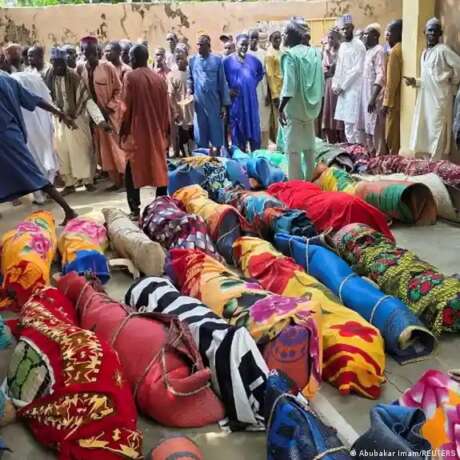
The Director General of the Nigerian Safety Investigation Bureau (NSIB), Capt. Alex Badeh Jr., has decried the recurrent failure of boat operators and passengers to wear life jackets, a practice he said often results in loss of lives during accidents.
This is just as he informed that the agency is seeking a Memorandum of Understanding(MoU) with the National Inland Waterways Agency(NIWA) to address recurring issues such as non compliance with wearing of life jackets, overloading and other safety regulations .
He said this in a virtual media briefing today.
Badeh Jr hinted that the issue of passengers not putting on life jackets onboard a boat which has resulted into lost of lives has become a recurring decimal during NSIB investigation of maritime accident..
The NSIB DG said that the bureau will replicate what it has done in the aviation industry in the maritime sector to reduce the number of accidents and casualties by compelling boat operators and passengers to put on their life jackets and also comply with other safety procedures.
On the call in some quarters that NSIB’s 6 per cent share of the Ticket Sales Charge (TSC) should be slashed to 4 per cent, Badeh Jr. said if slashed it will negatively affect its operations.
The TSC is collected by airlines from passengers on behalf of aviation agencies and shared among the Nigerian Civil Aviation Authority (NCAA). Nigerian Airspace Management Agency(NAMA), NSIB,Nigeria College of Aviation Technology (NCAT).
According to the sharing formula NSIB receives 6 per cent, NCAT gets 7 per cent.
However ,the recent development saw NAMA suggesting that NSIB’s percentage be slashed from the current 6 per cent to 4, a situation that has generated heated debate in the aviation sector.
Fielding questions on the matter, Badeh contended that presently the accident investigation body gets the lowest percentage of all the agencies, wondering why it should be further reduced
He opined that the move is coming on the heels of its expanding responsibility across aviation, maritime, rail and road transport.
According to him, “We get the lowest percentage of all the agencies. With this proposed reduction, of course, it is going to negatively affect the NSIB.”
NSIB, he informed is already experiencing reduction in its existing allocation, adding that further slash will seriously affect its operations .
He, however said that NSIB has not received its six per cent of TSC since April or May.
This, he pointed out has not in anyway prevented NSIB from carrying out investigations or expanding its multimodal accident investigating functions.
He stated that the agency is working on a more sustainable formula and that the agency is discussing with the Presidency to work it out ..
He said the essence of this is to create a funding structure capable of supporting NSIB beyond the financial challenges the agency is presently experiencing
Besides, the NSIB DG hinted that the Bureau expecting funds from other transport agencies but that the agency has not received applicable funds from the Nigerian Railway Corporation(NRC) and that NIMASA has refuse to remit any money to it as it claimed it was not contained in its ACT.
Speaking on whether NSIB is truly independent, Badeh Jnr. said that the bureau has been independent since he took over in 2023 and that government has not for once interfere with the organisation’s job
On capacity building for the agency’s staff, he said that NSIB no longer training its workers abroad but instead the agency bring resource persons to conduct the training here in Nigeria.
On whether NSIB is fully on ground in the Maritime industry during accident investigation, he said that the agency is receiving cooperation from NIWA and NIMASA and as a result it is on ground
About The Author