…Says TRACON Obsolete, Spare Parts Not Found, Equipment Working Without Back-Up
The Managing Director of the Nigerian Airspace Management Agency (NAMA) Engr. Farouk Umar has warned that Nigeria risk losing its airspace surveillance service due to obsolete nature of the Total Radar Coverage of Nigeria (TRACON) equipment, whose spare parts cannot be found.
Farouk revealed that the life span of such important high-tech equipment is usually 10 years but said since 2014 the TRACON equipment began to go out of fashion as countries around the world began to migrate to more sophisticated and advanced technology.
He emphasised that providing Air Navigation Services(ANS)in line with the International Civil Aviation Organisation (ICAO) requirements might be a challenge if urgent steps are not immediately taken to upgrade the TRACON.
Recall that TRACON project, a crucial, multibillion-naira project was commissioned in 2001 to enhance air safety by providing full radar surveillance across Nigerian airspace.
The project involves nine radar sites maintained by NAMA in partnership with Thales of France, designed to track and identify aircraft in real-time by combining Primary Surveillance Radar (PSR) and Secondary Surveillance Radar (SSR) for monitoring, identifying, and controlling air traffic to enhance safety.
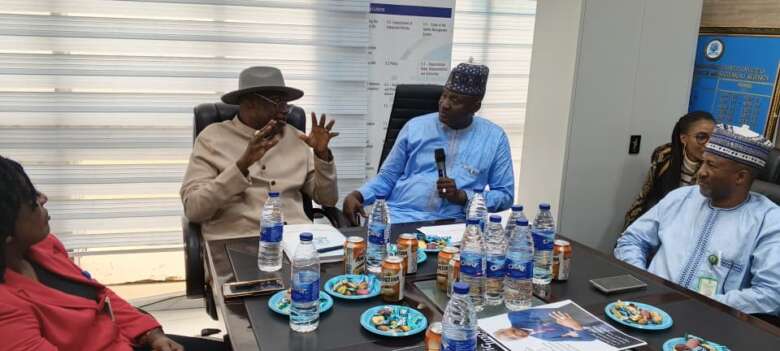
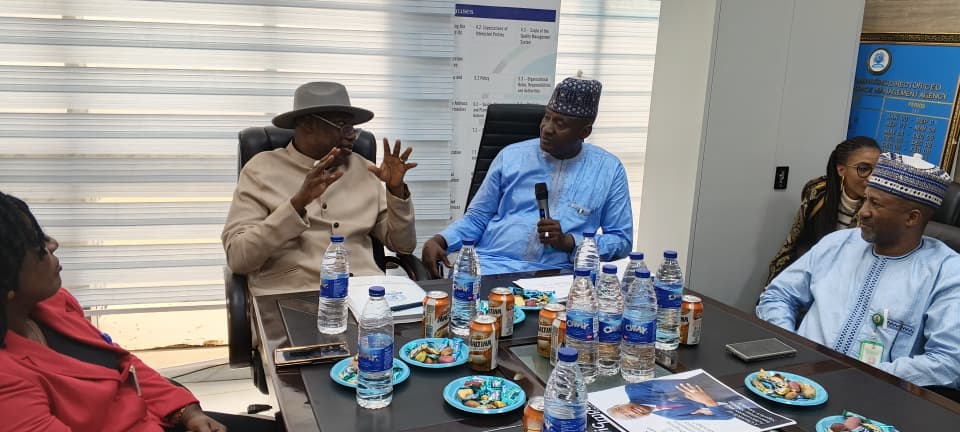
Briefing the new Permanent Secretary of the Ministry of Aviation and Aerospace Development, Mahmoud Kambari who paid a familiarisation visit to his office in Abuja, Farouk outlined the challenges, ongoing projects and planned projects of the agency.
“Our area of urgent attention includes the ATS surveillance service. TRACON System has aged (deployment started in 2008; completed in 2010). The Components are becoming obsolete with no spare parts. Most parts are working without back-up. The airspace is at the risk of losing surveillance service,” he said.
The NAMA MD listed some of the challenges facing the agency to include : the lack of federal government budgetary provisions for safety critical projects, high operational cost due to value of the naira, 30% federal government deduction from NAMA internally generated revenue (IGR), which he said is impeding NAMA from meeting its critical obligations.
Others are : inadequate operational and technical manpower to cope with increasing demand for air navigation services, inadequate training for operational and technical personnel due to paucity of funds, high level of indebtedness by airlines and state airports.
According to him, “Since 2008 we have been charging the same amount of N11,000 per aircraft for each flight operation, yet we are met with blackmail each time we want to increase the charges. N11, 000 is no longer realistic, yet the airport must remain serviceable. ” he said.
“We must sustain our equipment and we spend a huge amount of our funds on Automotive Gas Oil (AGO) and Premium Motor Spirit (PMS).” he lamented.
Responding, Kambari reaffirmed the Ministry’s commitment to working closely with its agencies, describing them as critical partners in achieving national aviation objectives.
He assured NAMA of the Ministry’s readiness to support their mandates and promote a unified approach to sectoral development.
The Perm Secretary highlighted the importance of reinstating regular top management meetings involving the Minister, the Permanent Secretary, Ministry Directors, and heads of aviation agencies noting that such engagements would serve as a strategic platform for addressing sectoral challenges and advancing sustainable solutions.
He emphasised that his administration would prioritise collaboration, staff welfare, and operational safety, stressing that a motivated workforce is essential for optimal performance.
He also called for timely staff promotions across agencies to prevent stagnation and boost morale.
“We will continue to support all agencies to succeed, ensuring that Nigeria’s aviation industry remains a key economic driver and a hub of global connectivity,” he stated.
He further urged staff across the agencies to remain dedicated, loyal, and supportive of their leadership in order to achieve organisational mandates effectively.
Kambari commended the Managing Director of NAMA, Engr. Farouk Umar, describing him as a seasoned professional whose leadership is vital to the growth of the sector.
He reiterated the commitment of the Minister to aligning Nigeria’s aviation industry with International Civil Aviation Organisation (ICAO) standards,while expressing satisfaction with Nigeria’s current ICAO rating, Kambari charged the agencies to intensify efforts towards improved performance in subsequent evaluation cycles.
About The Author