
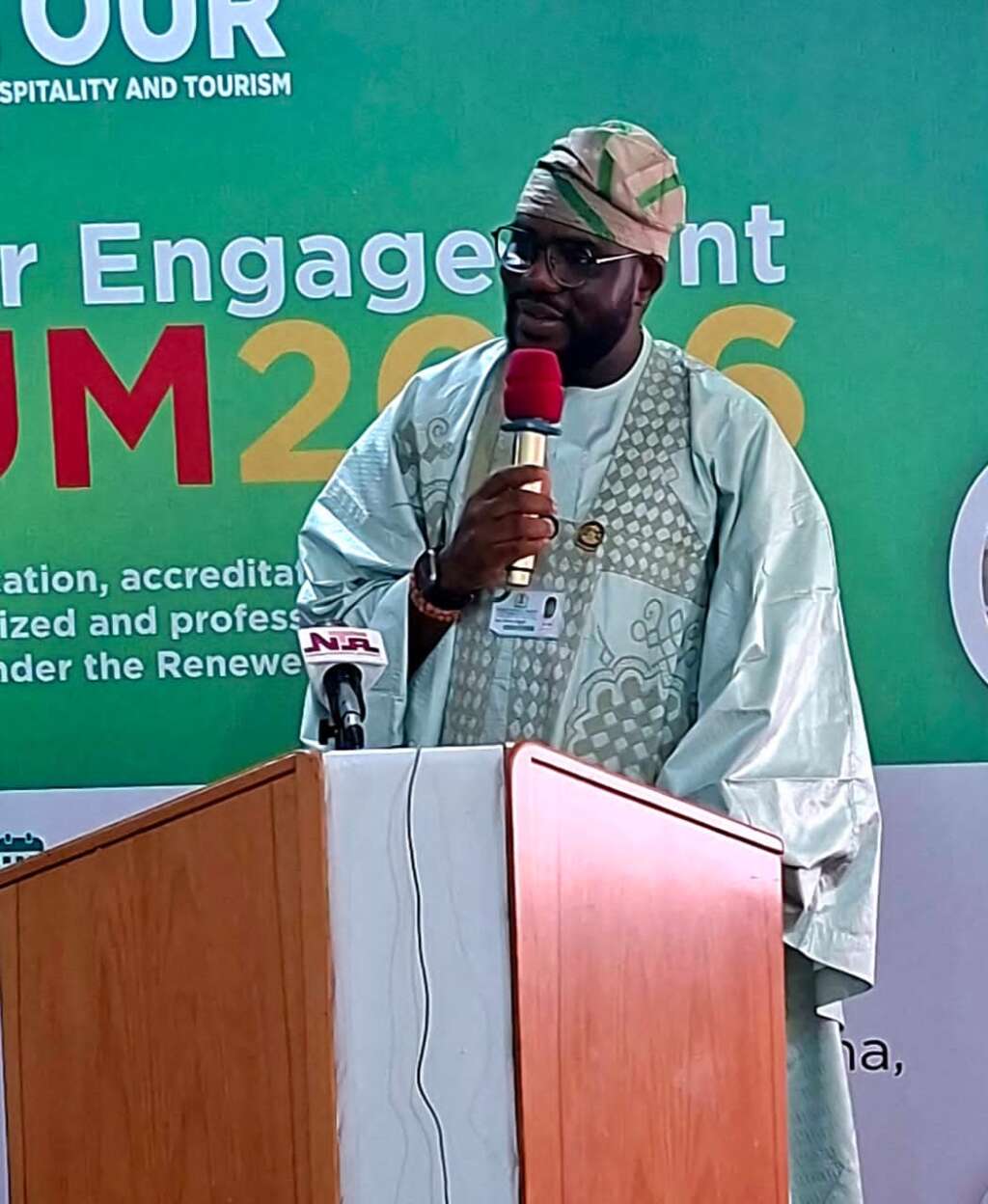
The Director General of the National Institute for Hospitality and Tourism (NIHOTOUR) Aare Abisoye Fagade says for institute to achieve and fulfill its task of producing competent personnel in the travel and tourism industry, it needs the cooperation and input of stakeholders from both public and private sectors.
He said this in his welcome speech at the Stakeholder Engagement Forum of the institute with the theme, “Advancing Registration, Identification, Accreditation, Training and Certification Towards a Standardised and Professional Hospitality, Travel and Tourism Ecosystem Under the Renewed Hope Agenda,” held today, in Abuja.
Fagade said the institute cannot fulfill its task of producing competent personnel in the industy in Nigeria without the cooperation and partnership of stakeholders from public and private sectors.
He said the stakeholders engagement provides an opportunity to deepen that partnership and also exchange ideas, explaining that NIHOTOUR was opened to listen to stakeholders:.
“We are here to exchange ideas. We are here to identify practical solutions to existing challenges and agree on actions that will move the sector forward.
“As we continue implementing the NIHOTOUR Act, our focus remains clear: to build a tourism and hospitality workforce that is competent, certified, globally competitive and ready to support Nigeria’s economic diversification agenda under the Renewed Hope Agenda of President Bola Tinubu,” he said.
Fagade said no tourist destination in the world succeeds without skilled manpower.
According to him, “One thing is clear: no tourism destination succeeds without skilled people. Infrastructure attracts visitors, but professionalism keeps them coming back. The true strength of any tourism economy lies in the competence, ethics, skills and service culture of its workforce.”
“That is why the NIHOTOUR Act places significant responsibility on the Institute to regulate standards, strengthen capacity, promote professional certification, support research and ensure that Nigeria develops a workforce capable of competing confidently on the regional and global stage,” he added
About The Author