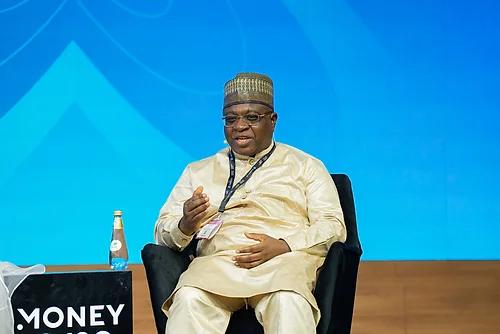

Chairman ,Lagos State Government Professorial Chair Endowment on Transport Studies, Prof. Bamidele Badejo, has submitted that multimodal transport integration is Nigeria’s most viable route to inclusive development, job creation, and sustainable urban growth.
Badejo made the call while presenting a Keynote Lecture titled, “The Future of Transportation in Nigeria: Trends, Challenges, Opportunities and the Way Forward” at the 2025 Transport Infrastructure Summit in Lagos.
This is just as he also advocated for urgent integration of all transport modes in Nigeria to unlock the nation’s economic and social potential.
Transport, he argued remains the “lifeline of any nation” and its dysfunction has a ripple effect on productivity, trade, and safety, noting that when transport systems collapse, every aspect of life grinds to a halt, from essential services to economic activity.
According to him, “Transportation is life, nurtures life, and keeps life going. Without it, everything becomes stunted and deficient in reaching its full potential.”
Badejo in his submission described Nigeria’s transport reality as a paradox; noa nation of vast opportunity trapped by poor planning and weak infrastructure, adding that despite its population and resources, Nigeria still relies overwhelmingly on road transport, which carries over 90 per cent of passengers and freight.
This dominance, he argued, has come at a high cost: crumbling roads, constant congestion, environmental degradation, and soaring logistics prices that hinder industrial growth.
Badejo urged the Federal and State governments to move from road-centric planning to multimodal transport integration, linking rail, road, air, and waterways into a single efficient network. He emphasized that this approach not only boosts connectivity but also reduces travel time, cost, and emissions.
“Developing an integrated multimodal transportation system is crucial for Nigeria’s sustainable national development. It will improve efficiency, reduce costs, and promote environmental sustainability,” he said.
He further noted that transportation should be viewed as a derived demand one that responds directly to population, trade, and industrial activity. Hence, planning must be data-driven and responsive to evolving urban and rural mobility patterns.
Nigeria’s transport development, he explained, is held back by multiple structural weaknesses, including policy inconsistency, fragmented regulation, poor maintenance culture, and chronic underfunding. He criticized the proliferation of transport agencies with overlapping roles, describing it as a major cause of inefficiency.
Badejo also identified energy instability, indiscipline, and lack of human capacity as systemic bottlenecks.
“Our industry is still dominated by those qualified by experience rather than by knowledge,” he asserted.
He, however stated that despite these challenges opportunities abound that can reposition the transport sector as a growth engine.
He listed the opportunities to include: clean energy mobility, data-driven logistics, and port modernisation.
Nigeria, he pointed out can replicate its mobile technology leap by leapfrogging older transport technologies, adopting smart mobility systems, and embracing private sector participation.
Badejo advocated for for stronger institutional collaboration, green transport investment, and a maintenance culture that prioritizes sustainability over political expediency.
In his words, “The future will not just happen; we must build it deliberately.”
He urged policymakers to commit to a national multimodal transport framework that ensures connectivity, innovation, and resilience.
About The Author