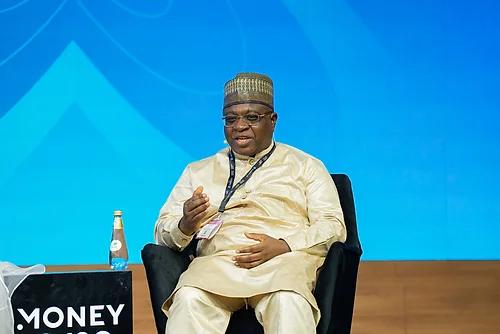

Photo caption : The Director General/CEO, NSIB, Capt. Alex Badeh Jnr,
…Pioneers Two Regulatory Frameworks For Maritime, Rail Sectors
The Nigerian Safety Investigation Bureau (NSIB) has restated its commitment to enhancing transportation safety across air, marine, rail, and other forms of land transport in Nigeria through a standardised, independent, and forward-looking investigative approach.
This is just as it also reiterated that with its expanded mandate as enshrined in the NSIB Act of 2022, the Bureau is pioneering a new era of multimodal safety oversight, underpinned by globally recognised investigative practices and a clear mission: to prevent accidents by learning from them.
A statement signed by the Director, Public Affairs and Family Assistance, NSIB,Mrs. Bimbo Olawumi Oladeji, stated that as part of this strategic vision, the Bureau is finalising two critical regulatory frameworks, the NSIB Casualty Investigation Regulations for the Maritime Mode of Transport and the Rail and Track Accident Investigation Regulations for the Rail sector.
These instruments, the NSIB said are tailored towards Nigeria’s operating realities while drawing strength from international best practices.
Oladeji stated that the maritime regulations aligned with the International Maritime Organisation(IMO) Casualty Investigation Code, establishing a standardised process for investigating accidents on inland waterways, ports, and Nigerian-flagged vessels.
The rail investigation regulations, likewise, are being developed with due consideration for the unique operational structure and geographic scope of the Nigerian railway system, while referencing international norms in rail safety investigation.
These developments, she said build upon the NSIB’s successful alignment with ICAO Annex 13 for air accident investigation, a framework that has guided aviation safety improvement worldwide and continues to inform Nigeria’s aviation sector reforms.
She pointed out that by adopting this harmonised, mode-agnostic approach, the Bureau aims to create a unified culture of safety across the nation’s transport infrastructure.
The Bureau’s direction, , Director General/CEO of NSIB, Capt. Alex Badeh Jnr. said, ‘The goal is not merely to investigate accidents, but to ensure that every finding and every safety recommendation becomes a cornerstone for safer transportation in Nigeria. Our regulations are not only about compliance; they are about relevance, relevance to our waterways, rail systems, and the millions of Nigerians who depend on them daily.’
The development of these regulations, the NSIB boss said has been rooted in inclusive consultation, incorporating field visits to jetties, inland waterways, ports, and rail infrastructure across Nigeria.
This practical engagement, he added ensures the regulations are adaptable, devoid of theoretical ambiguities, and fully responsive to Nigeria’s transport landscape.
He, however, said that while NSIB remains responsible for conducting independent investigations and issuing safety recommendations, the responsibility for implementation lies with other critical agencies.
Badeh Jnr. called on stakeholders such as the Nigerian Maritime Administration and Safety Agency (NIMASA), Nigerian Ports Authority (NPA), Nigerian Shippers Council, National Inland Waterways Authority (NIWA), National Oil Spill Detection and Response Agency (NOSDRA), and the Nigerian Railway Corporation (NRC) to begin proactively building internal capacity for the adoption and implementation of NSIB safety recommendations.
“Safety recommendations are not mere reports; they are calls to action. The effectiveness of any investigation is measured not by how well it is written but by how well it is implemented. We urge our partner agencies to view this as a shared mission for national safety,” Badeh Jnr. said.
Badeh Jnr. said that the NSIB believes that the lessons learned from marine, rail, and air accidents must not be siloed but rather used to form a national benchmark for proactive safety strategies.
He stated that in the coming weeks, as these regulations are finalised and presented to stakeholders, the Bureau will continue to sensitise agencies and the public about their roles in transforming Nigeria’s transport safety landscape.
He added that as Nigeria continues to expand its transport infrastructure in pursuit of economic development, the role of safety cannot be overstated.
The NSIB, the Director General said stands ready, not only as an investigator of past tragedies but as a catalyst for a safer and more resilient transport future for all Nigerians
About The Author